What Is NBI Clearance and What Is It Used For? A Complete Guide (2026)
Last updated: November 6, 2026
Quick answer: NBI clearance is a Philippine government document from the National Bureau of Investigation. It tells the person who asks for it whether your name matches any criminal record in the NBI database. It is usually valid for one year from the date it is issued.
What Is NBI Clearance?
Think of it as a national background check on paper, or on your phone. When you apply, the NBI compares your name, personal details, and fingerprints with its records. If nothing matches, you receive a clearance that supports your claim of having no criminal record on file.
Some people call it a character reference or a police record check. Those names are close, but not exact. A character reference usually comes from a person who knows you. An NBI clearance comes from a government agency and is based on records.
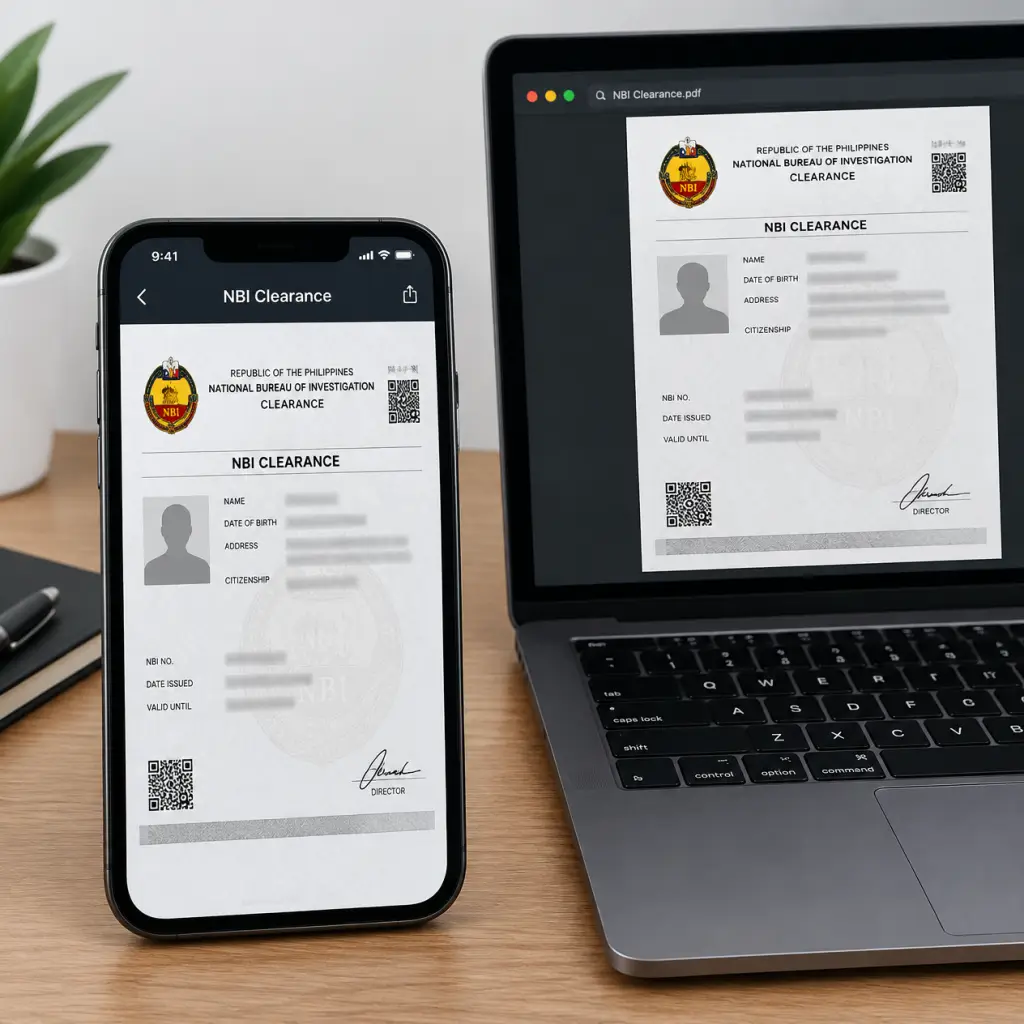
The document shows your full name, birth date, address, photo, a clearance number, the issue date, and a QR code. Employers and offices can scan the QR code to check that the paper is real.
Who Issues It and Which Laws Support It?
The National Bureau of Investigation is an agency under the Department of Justice of the Republic of the Philippines. It became the NBI in 1947 under Republic Act No. 157. In 2016, Republic Act No. 10867, known as the NBI Reorganization and Modernization Act, updated the agency powers and pushed it toward computer based services. Legal guides in the Philippines link the clearance system to these two laws.
Because the NBI collects names, photos, and fingerprints, it also has to follow the Data Privacy Act of 2012 (Republic Act No. 10173). This law requires the agency to handle your personal information carefully. You should still protect your own clearance number and reference number, and share copies only with offices that truly need them.
How Does the NBI Check Your Record?
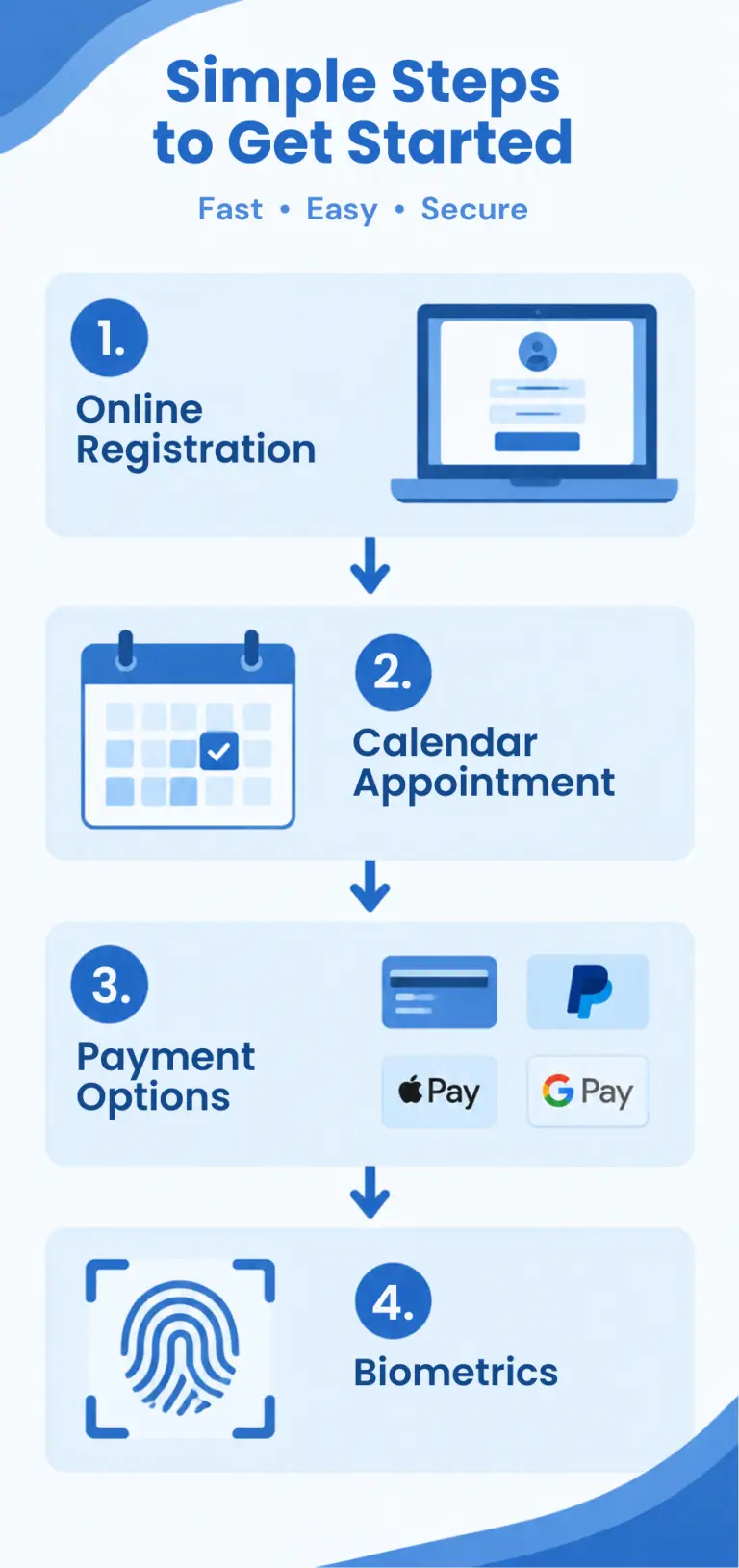
The process has four main parts. You start on the official online registration portal at clearance.nbi.gov.ph, where you create an account and enter your details. You then choose a branch and set an NBI online appointment. After you pay, the system gives you a reference number, which some people call a tracking number. You will use it to pay, to track your application, and to show at the branch.
The last part happens in person. At the branch, staff take your photo and fingerprints. This step is called biometrics and photo capture, and it cannot be done from home for a new application. The system then runs a criminal record verification, which means it looks for matches in the database.
| Stage | What happens | What you need |
|---|---|---|
| 1. Online registration | Create an account and fill in your details | Email, mobile number, correct spelling |
| 2. Appointment | Pick a branch, date, and time | Internet access |
| 3. Payment | Pay the fee using the reference number | GCash, Maya, 7-Eleven, online banking, or other listed options |
| 4. Branch visit | Biometrics and photo capture | Valid government-issued ID, reference number |
| 5. Result | Release if there is no match, or extra checking if there is | Patience if your name needs review |
What Do No Hit and Hit Mean?
After your fingerprints and details are checked, the system gives one of two results. This is the part that worries applicants most, so it helps to understand it well.
A No Hit status means the system found no match with a criminal record. In many cases the clearance is printed or released the same day. A Hit status means your name is the same as, or very close to, a name in the database. It does not mean you have a record. Many people share common names, and the system flags any close match.
When there is a hit, your application goes into Quality Control. Staff check the details by hand to see whether the match is really you or only someone with a similar name. This can take longer than a day, and sometimes several days. A clearance that is waiting for this review is often called a pending clearance.
In rare cases the match is real. A derogatory record is any entry that shows a criminal case, a warrant, or a similar issue connected to a person. If that happens, the NBI follows its own rules, and the applicant may be asked for court papers or other proof.
| Result | Meaning | What to expect |
|---|---|---|
| No Hit | No matching record found | Often released the same day |
| Hit | Possible match with a similar name or record | Manual review in Quality Control, which can take days |
| Pending clearance | Application waiting for review | Follow the release date on your slip or notice |
| Derogatory record | A real record linked to the person | Extra steps and documents may be needed |
What Is NBI Clearance Used For?
The answer depends on who is asking. Offices want proof that a person has no serious record, so they ask for this clearance during hiring, travel, and licensing.
| Use | Why it is asked |
|---|---|
| Local employment | Companies check job applicants before the first day of work |
| Overseas employment (OFW) | Recruitment agencies and foreign employers need proof for deployment |
| Visa and immigration requirements | Embassies ask for it for work, study, residency, or citizenship applications |
| Business permits | Some local offices ask owners for it during permit processing or renewal |
| Professional licensing | Boards and agencies may ask for it as a requirement before a license is given |
| Government jobs and firearm licenses | Used as part of the background review |
| School, scholarship, and legal papers | Some schools, offices, and courts request it |
The exact list changes by office. If an employer, embassy, or agency asks for your clearance, ask them what format and how recent it must be.
Which IDs Do You Need?
Bring a valid government-issued ID to your appointment. Common choices include a passport, UMID, driver license, and postal ID. Check the official list before you go, because accepted IDs can be updated. An NBI clearance is not a main photo ID. Most offices treat it as a supporting document, so keep a regular ID with you as well.
How Long Is It Valid, and What About Renewal?
The usual validity period is one year from the date of issue, not from the day you applied. Many legal guides say the same thing. The one year rule is a practice used by the NBI, so it is a good idea to read the date printed on your own copy.
In real life, the rule can be stricter. Some employers want a clearance that is only three to six months old. Some embassies ask for a newer one too. If you are job hunting or applying for a visa, get your clearance close to the time you need it.
When the year ends, you can file a renewal application. If your personal details have not changed, renewal is usually simpler than a new application. If your name, birth date, or other details changed, you may need to register again with the correct information. Either way, you receive a personal copy of the new clearance.
How Much Does It Cost, and Can It Be Free?
Most current guides list the clearance fee at about 130 pesos, plus a small system fee, for a total of around 155 pesos. Some sources show slightly different amounts or express options, so use the figure shown on the official portal on the day you pay. Online payment methods include GCash, Maya, 7-Eleven, and online banking, depending on what the portal offers.
First-time jobseekers may get a break. Under the First-Time Jobseekers Assistance Act (Republic Act No. 11261), government fees for documents can be waived once for qualified applicants. The benefit works only one time. You must show a barangay certification that says you are a first-time jobseeker, and the law also asks for an oath of undertaking, which is a signed promise that your statement is true. Your barangay office can guide you on both papers.
What Is the Walk-in Policy, and Where Are the Satellite Offices?
The NBI uses a no walk-in rule at its clearance centers. You need an appointment, and you should bring your reference number and ID. If you miss your date, several guides say you usually have about 15 days to process the paid application at the same branch, but the rule is not written the same way everywhere. Check your transaction page or ask the NBI before you assume you have more time.
Besides the main office and regional centers, the NBI runs satellite offices, many of them inside malls. A new one opened at Cebu IT Park around October 22, 2026, according to local news, and it is aimed at workers in the area. Its reported hours are Monday to Friday, 10:00 in the morning to 5:00 in the afternoon.
NBI Clearance vs Police Clearance
The two documents are easy to mix up, but they are not the same.
| NBI clearance | Police clearance | |
|---|---|---|
| Issued by | National Bureau of Investigation | Philippine National Police or a local police office |
| What it checks | A national record database | Usually police records, often in one city or area |
| Common uses | Jobs, work abroad, visas, licenses | Local jobs and local requirements |
| Usual validity | About one year | Often six months to one year, depending on the rule |
If an employer or embassy asks for an NBI clearance, a police clearance will not replace it. Also, a barangay clearance is a different paper from the local barangay office and does not work as a national record check.
What Changed in 2026?
Two updates matter this year. First, in July 2026, the NBI and the Department of Information and Communications Technology launched NBI eClearance inside the eGovPH Super App. News reports say that eligible, verified users can renew in as little as five minutes and view the digital copy in the app.
Second, on October 23, 2026, the Department of Foreign Affairs and the NBI launched an online authentication service. Applicants can ask for a DFA e-Apostille, which is an electronic authentication of a document for use abroad, while processing NBI eClearance in the app. The news report lists a separate fee of 200 pesos for the e-Apostille. Rules on who can use these new options may change, so read the notice inside the app before you start.
Common Mistakes to Avoid
The most frequent problems are simple ones. People misspell a name or date during registration, miss the appointment, forget the ID, or pay through a website that is not official. Another common mistake is waiting until the last week before a job start date or visa deadline. Because a hit can add days, apply early and keep a scanned copy of the final clearance
Final Thoughts
NBI clearance is one of the most requested papers in the Philippines because it gives employers and offices a quick way to check a record. If you remember a few points, the rest is easy: apply on the official portal, keep your reference number safe, bring a valid ID, and give yourself extra days in case of a hit. Always confirm fees and rules on official channels, since they can change.
Frequently Asked Questions
What is NBI clearance in simple words?
It is a document that shows whether the NBI found a criminal record that matches your name. People use it as proof of a clean record.
Is NBI clearance the same as a character reference?
No. A character reference comes from a person. An NBI clearance comes from a government agency and is based on records.
How long is NBI clearance valid?
Usually one year from the issue date. Some offices ask for a newer one.
Does a Hit status mean I have a criminal record?
No. It means your name matches or is close to a name in the database, and staff need to check it by hand.
Can I get NBI clearance fully online?
You can register, book, and pay online. A new application still needs a branch visit for biometrics and photo capture. Eligible users may renew in the eGovPH Super App.
Is it free for first-time jobseekers?
It can be, once, under Republic Act No. 11261, if you present the required papers.
Do I need an NBI clearance to work abroad?
Overseas employers, agencies, and embassies often ask for it. Ask your agency or the embassy which version and age they accept.